
Competency-Based Education

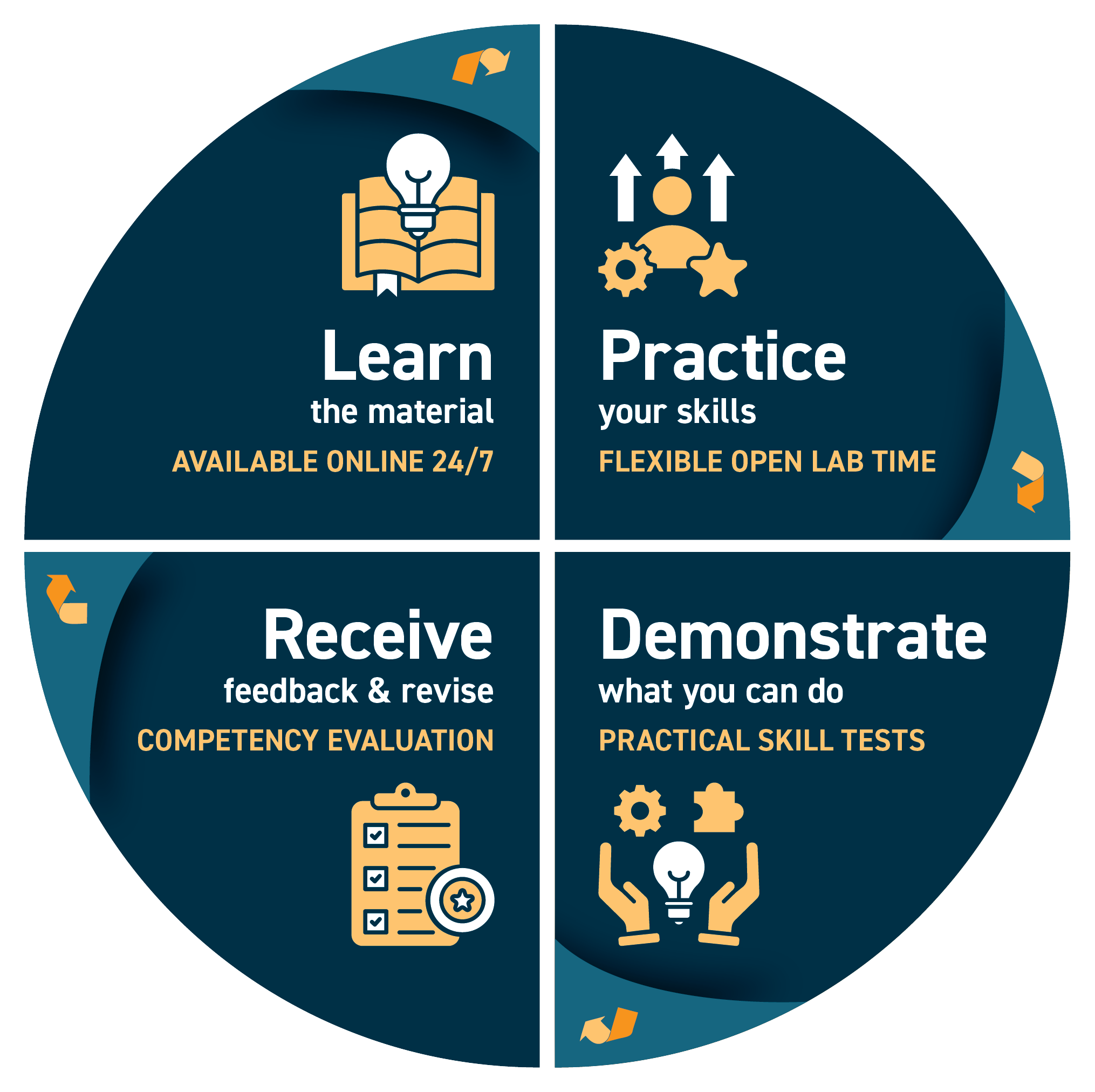
Circular graphic showing the process for competency-based education, with information repeated from text on the page.

Competency-Based Education
Thank you for your interest in competency-based education at BTC!

CBE is available in a small number of programs as we work to offer more flexibility, support and access for students.

What CBE looks like at BTC: 

  • Learn course concepts through flexible online learning
  • Practice and build skills in labs and other hands-on learning experiences 
  • Receive feedback and support from instructors as you develop your skills
  • Demonstrate what you’ve learned through competency-based assessments 

PROGRAM PATHWAYS


Jump to back to Sections List

Student FAQs

  • What is a competency?

    A competency is a skill or piece of knowledge. These are the abilities you learn when you complete a course. Competencies focus on the skills and knowledge people need to do their jobs well. This helps make sure what you learn is useful and helps prepare you to be ready for work in your chosen career.

  • What is CBE?

    Competency-Based Education (CBE) is a way of learning that focuses on building and showing real job skills. In CBE, you work on developing skills and knowledge (competencies) that match what is needed in your future career. At BTC, this means you will: 

    • Learn key ideas online 
    • Practice your skills in a lab 
    • Get feedback from instructors to help you improve 
    • Show what you’ve learned by completing assessments 

    This approach helps you learn at your own pace and make sure you can do the skills, as well as understand them. While the program is flexible, students still need to engage regularly, make consistent progress and attend lab or shop hours.

  • What does CBE look like in practice?

    Learn the skill or concept
    You will begin by learning new material through videos, readings, demonstrations, and instructor guidance. 

    Practice the skill
    You will apply what you learned during labs, shop time, simulations, or other hands-on activities with support from your instructor. 

    Show what you can do
    When you feel ready, you will complete a task or performance assessment to demonstrate your skills. 

    Receive clear feedback
    Your instructor will evaluate and provide feedback on your work so you understand what you did well and what may still need improvement. 

    Improve and try again if needed
    Learning is a process. You may use instructor feedback to strengthen your skills and re-attempt to demonstrate competency again. 

  • How do I know if CBE is right for me?

    Everyone’s life circumstances and learning preferences are unique. Competency-Based Education (CBE) can be a great option if you’re looking for added flexibility to balance school with work, family, or other responsibilities. 

    Many students find that skills like time management, organization, and the ability to learn independently are helpful in a CBE format. At the same time, you will have support from faculty and other staff to build and strengthen these skills as you go. In other words, you don’t need to feel like you have to have everything perfectly in place before you start. 

    Because choosing the right learning format is an important decision, the best next step is to talk with an Outreach Specialist. This BTC staff member can learn more about your goals, answer your questions, and help you explore whether a CBE program may be a good fit for you. Your College Navigator will also work with you to make sure you feel supported and set up for success. 

  • How is a CBE course different from other courses?

    CBE offers more flexibility than a traditional course. For example, you will not be working at the same pace or with the same established due dates as every other student. Instead, you will set your own learning schedule with help from faculty. Instructors and College Navigators will give you guidance on how to maintain a pace for learning that works best for you and help you stay on track with the course. You will have more flexibility regarding when you complete online coursework and schedule lab time, and you are expected to actively participate each week throughout the quarter.

    You will still register for and earn credits for each CBE course you are enrolled in, and will need to complete your coursework by the end of each 11-week quarter.


  • How do I get support?

    You will work closely with your instructors and a College Navigator. Your instructor will help you understand course expectations, provide you with feedback on your progress, guide your hands-on skill development, and evaluate your competency with required skills. You will also work with a College Navigator, who will be there to help you with pacing, planning, and staying on track. You will be able to ask for help if you feel confused, are falling behind, or are unsure what to work on next. 

  • How long are my classes?

    Each course will run for 11 weeks, but you will have flexibility regarding when you complete your assignments. Although you will have flexibility regarding when you complete certain online activities and hands-on work, you are still expected to make steady progress during the quarter, including regular interactions with your instructor.  

  • Does CBE allow me to complete courses at my own pace? What happens if I finish my coursework early?

    Not exactly. At BTC, Competency-Based Education (CBE) follows the same 11-week quarter schedule as other courses. You'll stay enrolled in your course for the full quarter, participate with your instructor and complete coursework throughout the term, and earn credits for each course you're registered in. 

    This credit/clock hours model of CBE does offer more flexibility in how you learn and demonstrate your skills, but it is not a self-paced model (where you can complete an entire program or course as quickly as you want). If you finish coursework early, you’ll continue to engage in learning activities and work with your instructor through the remainder of the quarter. This approach provides flexibility while maintaining the quarter structure used by Washington State's community and technical colleges. 

  • How many hours will I need to dedicate to school?

    The amount of time you spend in the lab depends on the course, the required competencies, and the amount of practice you need to demonstrate the required skills. You may need more or less practice time than others. Your instructor will provide opportunities for you to plan your schedule and practice your skills. For each credit hour, you should expect to complete a minimum of one hour of instruction and two hours of outside class preparation each week.

  • How do I know what my weekly class schedule is?

    You will use the course schedule, Canvas course information, and instructor directions to understand what to work on and when. Even though the CBE model is flexible, you should not wait until the end of the quarter to complete your coursework. You will work closely with your instructors to map out a guide that works for you. 

  • Are all lectures online, or is there in-class lecture time?

    In BTC CBE courses, you will complete most of your content preparation online, but your hands-on practice and skill demonstrations will happen during lab time. The exact format of the course will vary, so you should check Canvas (BTC’s digital classroom and learning platform), the course syllabus, and ask the instructor for details about required online work, shop/lab expectations, and any required in-person activities.  

  • Can I take all my courses in CBE format?

    While your program-specific courses will be offered in CBE format, general education classes (such as English and Math) and other classes required for your degree may not be offered in a CBE format. Visit your program page online for more information about courses required for your degree that are not offered in the CBE format. 

  • How am I graded?

    In BTC CBE courses, grades are based on how well you meet clearly defined competencies. You meet competencies by demonstrating your skills in assessments. You pass a course by earning an overall “B” grade or better, using the below grading scale: 

    • Skilled: “A” - You have fully demonstrated the required competencies with strong, consistent performance.  
    • Ready: “B” - You have shown sufficient competencies to move forward, though there may still be areas to strengthen.  
    • Skill Not Met: “F” - You have not yet demonstrated the necessary skills to meet the course competencies. 

    Students can track their progress in their courses in Canvas by accessing their grades and reviewing rubrics and instructor feedback.

  • What happens if I don’t pass my skills test/assessment?

    You need more practice (which is completely normal):  

    • You can try as many times as you need 
    • Your instructor will tell you exactly what to work on and help you make a plan to improve 
    • You'll get help finding the right resources  
    • You can use online materials to review  
    • You can practice in the shop during open hours  
Jump to back to Sections List

Employer FAQs

Jump to back to Sections List